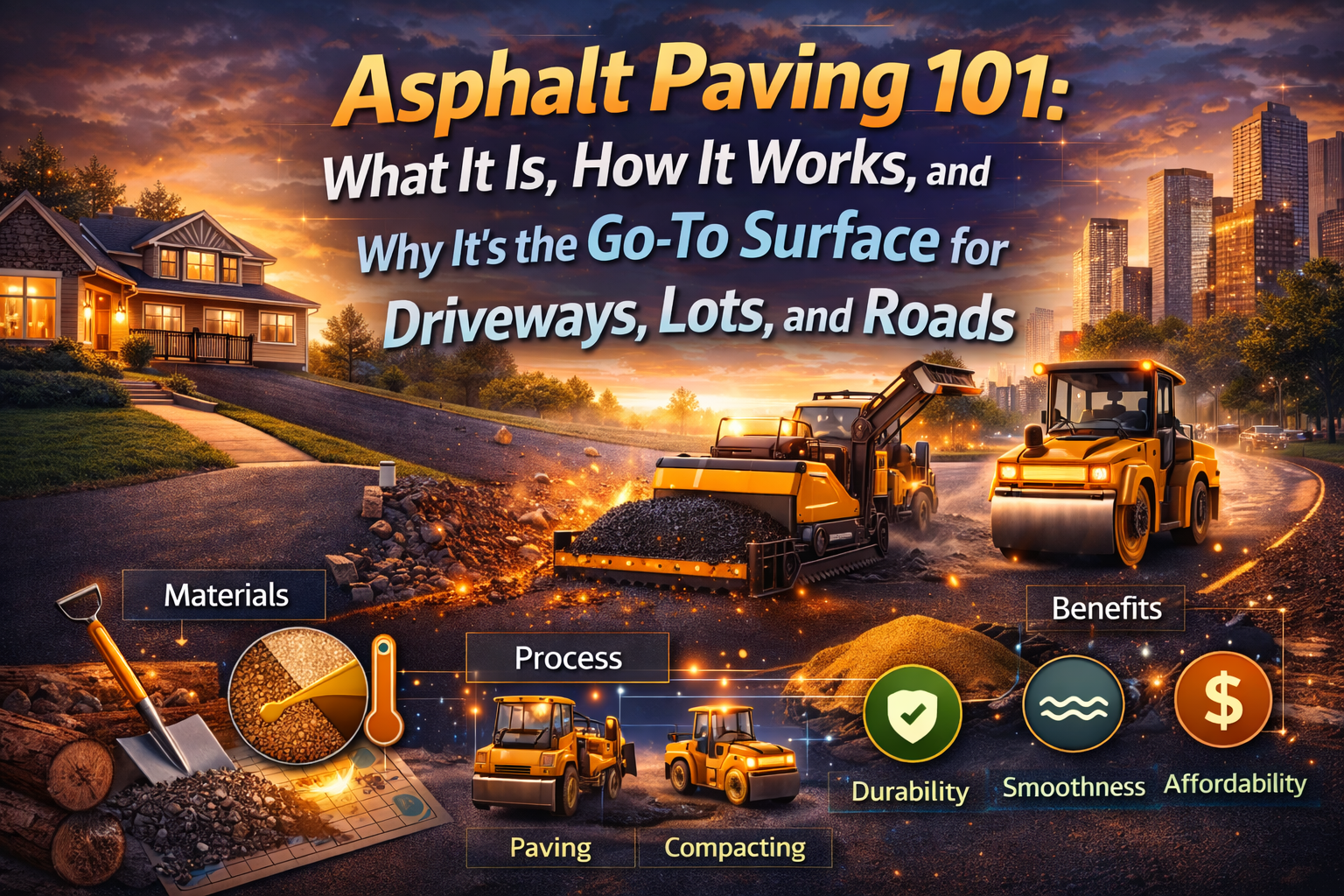
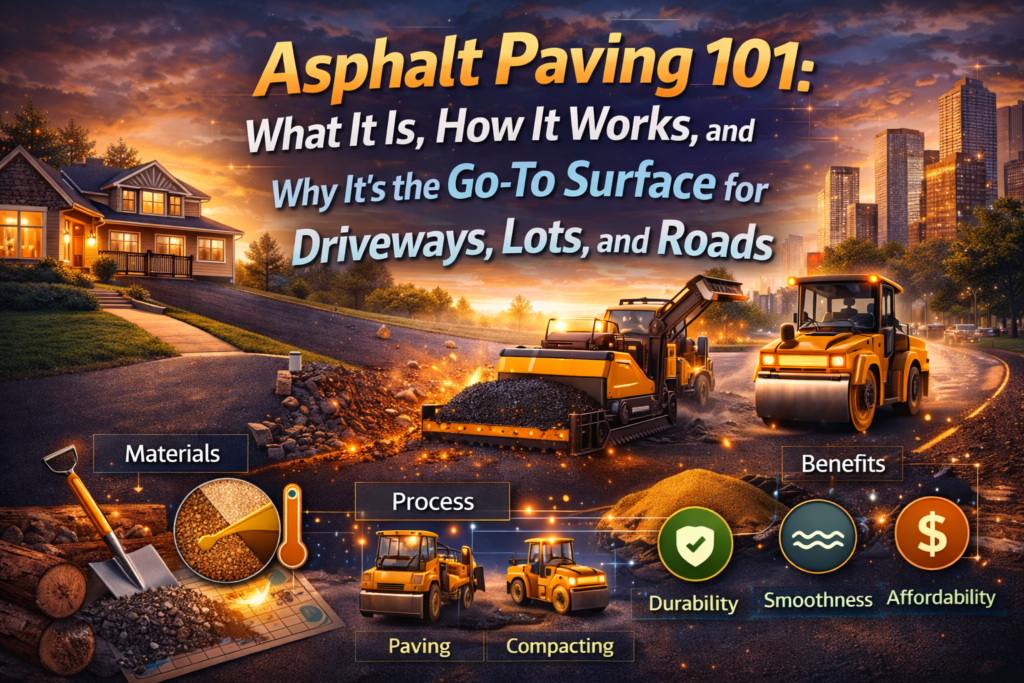
Drive down any street, pull into any parking lot, or cruise through any neighborhood, and you’re almost certainly rolling over asphalt. It’s one of those materials most people take for granted smooth, black, dependable without ever really thinking about what goes into it or why it’s everywhere. But asphalt paving is a craft, not just a pour-and-go job. Understanding the basics can help homeowners, business owners, and property managers make smarter decisions about their surfaces and appreciate the work that goes into a quality pave.
This guide breaks down what asphalt actually is, how the paving process works step by step, and why it continues to dominate as the preferred paving material across residential, commercial, and municipal projects.
What Is Asphalt, Exactly?
At its core, asphalt is an engineered mixture of aggregates sand, gravel, and crushed stone bound together by a sticky, black, petroleum-based binder known as bitumen. When heated, bitumen becomes fluid enough to coat the aggregate evenly, and when it cools, it hardens into a tough, flexible surface capable of handling everything from foot traffic to fully loaded semi-trucks.
The magic of asphalt lies in the balance of its ingredients. The aggregates give it strength and load-bearing capacity. The bitumen gives it flexibility and waterproofing. Together, they produce a surface that’s durable but not brittle, smooth but grippy, and capable of flexing slightly under pressure without cracking the way concrete might.
Asphalt is produced at high temperatures in specialized plants, then transported to job sites in insulated trucks to keep the mix hot and workable. Timing matters once asphalt cools too much, it can’t be properly spread or compacted, which is why experienced crews work quickly and efficiently from the moment the mix arrives.
Where You’ll Find Asphalt
Asphalt isn’t just for highways. It’s the material of choice for a huge range of applications:
- Residential driveways smooth, attractive, and quick to install
- Commercial parking lots cost-effective and easy to maintain
- City streets and alleyways quiet, durable, and repairable
- Highways and interstates the backbone of modern transportation
- Walkways, bike paths, and recreational trails
- Airport runways and industrial yards
Its versatility is one of the big reasons it’s remained the dominant paving material for decades. Whether it’s a 20-foot driveway or a 20-acre distribution center, the fundamental process is the same it just scales up or down.
The Asphalt Paving Process, Step by Step
A good asphalt job isn’t about slapping down hot mix and rolling it flat. It’s a carefully sequenced process where every step sets up the next one. Skip a step or rush it, and the surface will tell on you within a year or two. Here’s how a professional paving project actually unfolds.
Step 1: Demolition and Removal
Every paving project starts with a clean slate. If there’s existing asphalt, concrete, or pavers, they need to come out first. Crews use heavy equipment bobcats, excavators, forklifts, and dump trucks to tear up the old surface and haul it away. The good news is that old asphalt doesn’t just go to a landfill. It’s one of the most recycled materials in the world, often ground up and reused in future asphalt mixes, which reduces waste and helps keep costs down.
Step 2: Grading and Sloping
Once the area is cleared, the crew grades the surface to ensure proper drainage. This is one of the most overlooked yet critical steps in the entire process. Water is asphalt’s biggest enemy it causes cracks, potholes, heaving, and erosion so the surface has to be sloped just right to direct water away from the pavement and toward drains or landscaping.
Modern paving companies use laser-guided equipment and GPS technology to get grading dialed in with precision. A fraction of a degree off can mean pooling water and premature failure down the road.
Step 3: Preparing the Sub-Base
The sub-base is the unsung hero of every asphalt surface. It’s the compacted layer of crushed stone or aggregate that sits beneath the asphalt and acts as the true foundation. A strong sub-base does three things: it supports the weight of the pavement and everything on it, it acts as a frost barrier against freeze-thaw damage in winter, and it prevents the asphalt from buckling or developing depressions over time.
Proper thickness and compaction at this stage are non-negotiable. If the sub-base isn’t solid, nothing built on top of it will last no matter how good the asphalt mix is.
Step 4: The Proof Roll
Before any asphalt goes down, the crew performs what’s called a proof roll essentially a stress test for the sub-base. A loaded dump truck is driven slowly across the entire surface area. If any section flexes, dips, or shifts more than about an inch under the weight, that section needs additional reinforcement before the project moves forward. It’s a simple but powerful quality check that catches problems before they get buried under fresh asphalt.
Step 5: Binder Layer
Once the sub-base passes inspection, a binder layer is applied. This is a thick layer of larger aggregate mixed with oil, and its job is to bond everything together and give the pavement its structural strength. Think of it as the muscle beneath the surface the layer that actually carries the load.
Step 6: Laying the Surface Asphalt
Now comes the part most people picture when they think of paving: the fresh, hot, jet-black asphalt being laid down. Delivered at around 300°F, the surface mix is spread using a paving machine and must be worked while it’s still hot. This top layer is made of smaller aggregates, sand, and bitumen, giving it that signature smooth, clean finish. It’s the layer you actually see, drive on, and park on.
Step 7: Butt Joints and Transitions
If the new pavement connects to existing surfaces sidewalks, garages, other driveways, adjoining lots the crew creates butt joints to make the transition seamless. Done right, you shouldn’t feel a bump or lip when you cross from old to new. This step often separates professional work from amateur jobs.
Step 8: Final Compaction
The final step is compaction. Heavy rollers make pass after pass over the entire surface, pressing out air pockets and locking the aggregate into place. This is what creates the dense, tight, durable finish that asphalt is known for. Proper compaction is arguably the single most important factor in how long a new surface will last under-compacted asphalt fails fast, while properly compacted asphalt can last decades.
Why Asphalt Is So Popular
With all the paving options available, why does asphalt continue to dominate? A few reasons:
Durability. A properly installed asphalt surface can last 20 to 30 years with basic maintenance. That’s a serious return on investment.
Cost-effectiveness. Asphalt is generally much more affordable to install than concrete, and when repairs are needed, they’re usually quicker and cheaper.
Speed of installation. Most residential driveways can be completed in a single day. Even larger commercial projects move faster than comparable concrete jobs, which means less disruption for homeowners and businesses.
Flexibility. Asphalt’s slight give allows it to handle freeze-thaw cycles, ground movement, and heavy loads without cracking as easily as rigid materials.
Easy repairs. Cracks can be sealed, potholes patched, and worn surfaces resurfaced without tearing out the whole pavement. Few materials offer that level of repair flexibility.
Recyclability. Asphalt is the most recycled material in America. Old pavement gets ground up and reused, making it one of the more sustainable paving options available.
Quieter rides. Due to its open-graded surface, asphalt actually absorbs road noise, making it a quieter driving experience compared to concrete.
Keeping Asphalt in Good Shape
A new asphalt surface is an investment, and a little maintenance goes a long way toward protecting it. The basics:
- Avoid driving or parking heavy vehicles on fresh asphalt for at least 24 to 72 hours after installation
- Sealcoat every 3 to 5 years to protect against UV damage, oil stains, and water intrusion
- Repair cracks early before they widen and invite water underneath the surface
- Sweep and clean regularly to prevent debris buildup and staining
- Address drainage issues promptly standing water is the fastest way to destroy asphalt
With consistent upkeep, an asphalt surface can easily outlast its expected lifespan and save you thousands in premature replacement costs.
Final Thoughts
Asphalt paving is one of those things that looks simple on the surface but rewards attention to detail at every step. From grading and sub-base compaction to the final roll, each phase plays a critical role in how the finished surface performs over the years. Whether you’re resurfacing a driveway, paving a new parking lot, or just curious about what goes into the roads you drive every day, understanding the basics gives you a real appreciation for the craft and helps you spot quality work when you see it.
For property owners who want the job done right the first time, working with an experienced, local paving team makes all the difference. If you’re in the Lehigh Valley area and want to learn more about professional asphalt services, check out About Conte Paving & Construction Allentown to see how a seasoned team approaches paving projects from start to finish.